
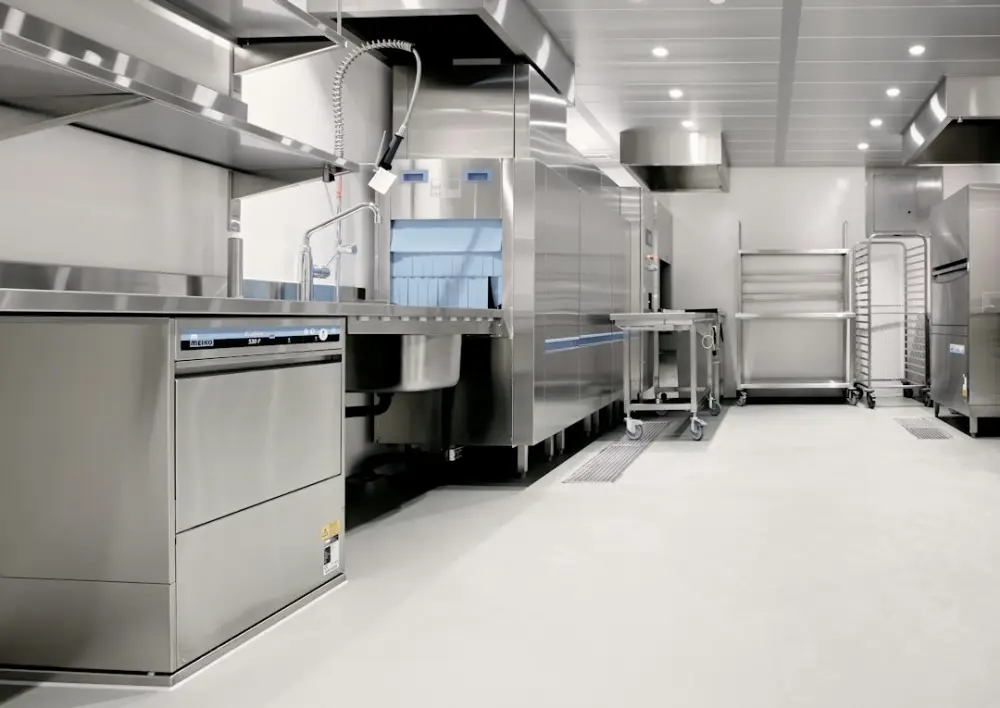
Matching temperature equipment to culinary processes is the practice of selecting specific thermal tools—such as immersion circulators, blast chillers, or precision probes—that align with the heat transfer requirements of a recipe. This ensures consistent results, food safety, and the precise execution of chemical reactions like fermentation, tempering, or sous-vide cooking in 2026.
Achieving repeatable results in a professional or high-end home kitchen requires moving beyond the vague settings of "low" or "high." By identifying the specific thermal needs of a dish—whether it is the gentle, constant warmth required for lactic acid bacteria or the rapid heat extraction needed for a blast chiller—cooks can prevent common failures like protein denaturation or stalled fermentations.
Fundamentals of Culinary Temperature Control
To master any culinary process, one must first understand the relationship between time and temperature. In 2026, the standard for food safety remains the rigorous management of the "Danger Zone," typically defined as the range between 40°F and 140°F (4°C to 60°C). Within this window, pathogens can multiply rapidly, making precision equipment not just a matter of taste, but a requirement for safety. Understanding the importance of temperature control in these environments allows a chef to push the boundaries of texture while remaining compliant with health standards.
Thermal inertia is another foundational concept. This refers to the tendency of a substance to resist changes in temperature. For example, a heavy cast-iron skillet has high thermal inertia; it takes a long time to heat up but holds that heat steadily when a cold protein is added. Conversely, a thin stainless steel pan reacts almost instantly to flame adjustments. Matching your equipment means choosing a high-inertia tool for searing steaks and a low-inertia tool, like a copper saucier, for delicate emulsions that might break if the heat lingers too long.
In fermentation, the stakes are equally high but the temperatures are lower. A sourdough starter or a batch of kombucha requires a stable environment, often between 70°F and 80°F. Even a five-degree swing can alter the flavor profile from sweet and fruity to harsh and acetic. Using a dedicated fermentation chamber or a seedling mat with a digital thermostat provides the steady-state environment that a standard kitchen counter cannot guarantee.
Heat Transfer Methods and Equipment Pairings
Every culinary task relies on one of three primary heat transfer methods: conduction, convection, or radiation. Selecting the right tool starts with identifying which method is most efficient for the desired outcome. Conduction involves direct contact, such as a steak hitting a hot griddle. For this, high-BTU gas burners or high-wattage induction hobs are the preferred equipment, as they can quickly replenish the heat lost to the food.
Convection uses a medium, like air or water, to move heat. This is where the immersion circulator excels. By constantly moving water around a vacuum-sealed bag, the circulator ensures that every millimeter of the ingredient is exposed to the exact same temperature. This is the gold standard for long-duration cooks, such as a 24-hour brisket or a 45-minute egg. Without the circulation component, hot and cold spots would develop, leading to uneven textures.
Radiation, often seen in salamanders or infrared grills, transfers heat through electromagnetic waves. This is ideal for browning or "finishing" a dish. When you choose the right precision temperature system, you are often looking for a way to bridge these methods. For instance, a combi-oven uses both convection (fan-forced air) and steam (enhanced conduction) to cook rapidly while maintaining moisture. In 2026, these units have become more accessible to the prosumer market, allowing for professional-grade roasting in smaller footprints.
Selecting Tools for Specific Heating and Cooling Cycles
The heating phase is only half of the equation; cooling is equally critical for texture and safety. In a professional setting, a blast chiller is used to move food through the danger zone as quickly as possible. This rapid cooling prevents the formation of large ice crystals, which can tear the cellular structure of food and lead to a mushy texture upon reheating. For the home enthusiast, an ice-water bath is the manual equivalent, though it lacks the monitored precision of a digital chilling cycle.
Chocolate tempering provides a perfect example of a complex heating and cooling cycle. To achieve the characteristic snap and shine of tempered chocolate, the cocoa butter must be melted, cooled to seed the correct crystal structure, and then slightly reheated. This requires a tool capable of 0.1-degree increments. A standard microwave or a double boiler is often too blunt an instrument; instead, a precision induction cooktop or a dedicated tempering machine is the appropriate match for this specific chemical process.
For those focused on beverage production, such as brewing or winemaking, the cooling cycle often involves a heat exchanger or a wort chiller. The goal is to drop the temperature of the liquid from boiling to pitching temperature (around 65°F–75°F) in minutes. This prevents the production of off-flavors like dimethyl sulfide (DMS) and ensures the yeast is introduced to a hospitable environment before wild bacteria can take hold.
Precision Monitoring and Calibration Standards
Even the most expensive equipment is useless if its sensors are inaccurate. Precision monitoring relies on two main types of sensors: thermocouples and thermistors. Thermocouples, like the K-type probes found in many high-end digital thermometers, are valued for their speed and wide temperature range. They are ideal for checking the internal temperature of a roasting turkey or the heat of frying oil. Thermistors, while slightly slower, are often more accurate within the narrow temperature ranges used in sous-vide and fermentation.
Calibration should be a routine part of kitchen maintenance in 2026. A simple ice-point calibration—placing the probe in a slurry of crushed ice and a small amount of water—should yield a reading of 32°F (0°C). If the device reads 34°F, every dish you cook is actually two degrees colder than you think. In the world of sugar work or egg cookery, two degrees is the difference between a soft-set custard and a curdled mess.
Advanced monitoring systems now include data logging capabilities. For long-term fermentation or dry-aging meat, a Wi-Fi-enabled logger can send alerts to a smartphone if the temperature drifts outside of a pre-set range. This level of oversight allows for corrections to be made—such as adjusting an HVAC vent or checking a refrigerator seal—before the product is ruined. This proactive approach is a hallmark of modern precision cooking.
Advanced Temperature Solutions for Modern Gastronomy
The cutting edge of temperature control involves Proportional-Integral-Derivative (PID) controllers. Unlike a standard thermostat that simply turns a heater on or off (leading to significant temperature swings), a PID controller uses a mathematical algorithm to predict how much power is needed to maintain a set point. It slows down the heating as the target temperature approaches, preventing "overshoot." This technology is what allows immersion circulators and high-end espresso machines to hold temperatures within a fraction of a degree.
In 2026, we are also seeing an increase in the use of cryogenic cooling in the kitchen. Liquid nitrogen, once the sole province of laboratory-style restaurants, is now used for making ultra-smooth ice creams or instantly freezing herbs to preserve their vibrant color. While this requires specialized storage dewars and safety gear, it represents the extreme end of matching equipment to a specific culinary goal: the instantaneous removal of latent heat.
Holding cabinets have also evolved. No longer just "warmers," modern holding cabinets control both humidity and temperature to keep fried foods crisp or braised meats succulent for hours. By matching the holding environment to the specific moisture content of the food, kitchens can maintain "just-cooked" quality during high-volume service periods. This requires a deep understanding of the dew point and how it affects the surface of the food.
Where to Begin with Thermal Equipment Integration
Implementing a precision-matched workflow requires a systematic transition from generic heat sources to specialized tools. To begin refining your culinary results, follow these concrete steps:
- Start by auditing your core recipes to identify which stages are currently suffering from inconsistent results, such as fluctuating fermentation flavors or uneven meat textures.
- The first step in establishing technical accuracy is to perform an ice-point calibration on all existing digital probes to ensure your baseline measurements are correct.
- To begin the hardware matching process, categorize your current equipment by its primary heat transfer method (conduction, convection, or radiation) to identify where you lack granular control.
- Next, evaluate the thermal inertia of your cooking vessels against the sensitivity of your ingredients to ensure you aren't using high-inertia tools for delicate chemical reactions.
- Finally, prioritize the acquisition of a PID-controlled device for your most time-sensitive processes, ensuring a steady-state environment that manual adjustments cannot replicate.
Resources: Archives, Categories, and Recent Posts
Mastering the intersection of temperature and process is a continuous learning journey. Whether you are troubleshooting a stalled fermentation or looking to upgrade your sous-vide setup, the key is to prioritize equipment that offers granular control and long-term reliability. Practical application of these tools ensures that your recipes are executed with the same level of detail in 2026 as they were when they were first developed.
At BrewJacket, we focus on the intersection of precision control and culinary execution. Our archives offer a wealth of information on maintaining the delicate balance required for fermentation and high-accuracy food preparation. By understanding the physics of heat and the specific requirements of your ingredients, you can choose equipment that doesn't just heat food, but masters the process. Explore our recent posts and categories to find deep dives into specific hardware and the science of temperature-driven flavor development.